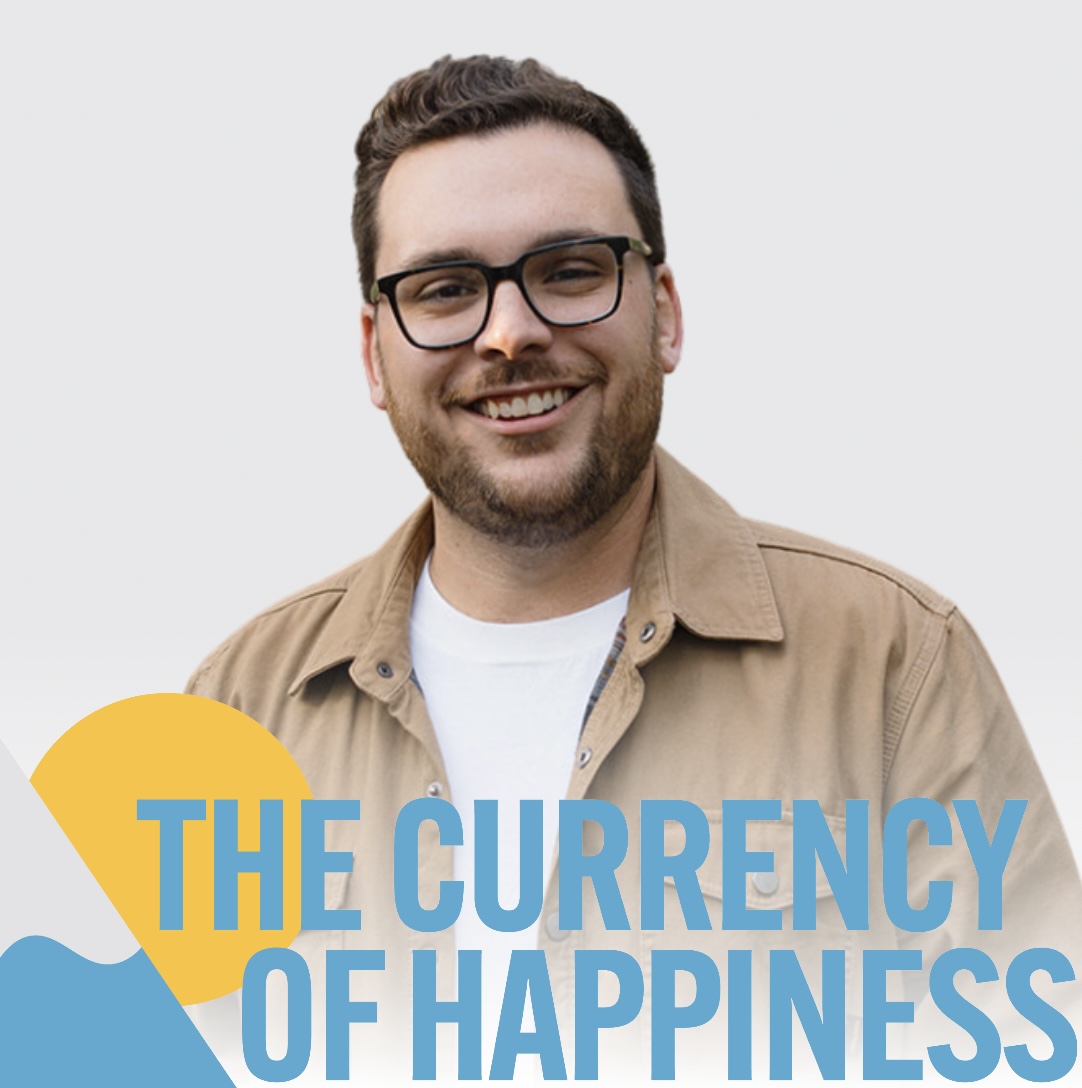
Hey, I'm Andrew!
We crushed $60K of debt in 7 months!
Here is why you shouldn't listen to me:
Had $60,000+ in Debt
Our Relationship Was on the Rocks
I Worked in a Warehouse
Couldn't Afford Steel Toe Boots ... so Found a Size Too Small at a Thrift Store and Had a Numb Toe for 6 Months
But here is why you SHOULD listen to me:
Paid Off $60,000 of Debt in 7 Months
Retired My Wife Before 30 Years Old
Work in Financial Services Industry for 8+ Years
Bought 2 Properties in One Day
Became a 2x Amazon #1 Best Selling Author in 9 Days
Can Now Buy Shoes that Fit
Turn Your Dreams Into Reality
Do you want the FREE framework that I have used to hit every single one of my goals?
Listen to The Currency of Podcast
Launching January 5, 2026



Does this sound familiar?
Are you tired of living paycheque to paycheque?
Do you feel like you're working hard but not getting ahead financially?
Are you tired of chasing success that never quite satisfies?
Do you struggle to understand investing or feel intimidated by it?
Do you avoid looking at your bank account balance?
Do you feel like everyone else has it figured out except you?
Do you dream of being debt-free?
Do you want to feel confident in your financial decisions?
Would you like to leave a financial legacy for your loved ones?
Are you ready for honest conversations about money and meaning?
Do you want real stories, not surface-level success?
Are you ready to treat happiness as something you build, not chase?
Don't worry. I've been there to.
Grab Your Copy of My FREE Goal Setting Framework
A Framework You Can Use Today.
Not Just “Feel Good” Advice.
This isn’t vague motivation.
It’s a simple, step-by-step system I’ve used personally:
✅ Clarity on what matters most
✅ Goals you can actually achieve
✅ Worksheets you will use
✅ Life aligned across money, family, purpose and freedom
Conversations that go deeper than money.

The Currency of Happiness podcast explores life, purpose, leadership, money and meaning through honest conversations with thinkers and doers.
If You Want Clarity On What You Are Building...

Looking For More?
Check out the Blog and More In-Depth Show Notes from the Podcast

The $5 Lesson That Changed EVERYTHING
I once worked in steel-toe boots from a thrift store that were a full size too small. My toes still haven't forgiven me.
But here's the thing: I needed those boots. Not just to keep my job. I needed what they taught me.
My wife Emily and I had just come home from our honeymoon, excited and ready to start our life together, when I found out that the company I worked for was financially struggling. We're talking nobody-knows-if-paychecks-are-coming levels of struggling. So I did what any brand-new husband, in a panic and with absolutely no plan, does: I took the first job I could find. A warehouse job. Not glamorous, not inspiring, but it paid.
We didn't even have money for steel-toe boots, so I hit a thrift store and found a pair for $5 in a size too small. Every day, within 15 minutes of starting my shift, my big toe would go completely numb. I worked there for six months and hated almost every minute of it.
But the warehouse wasn't the problem. The numb toes weren't the problem.
I was the problem.
The Real Issue I Couldn't See
I was carrying ego into a life that couldn't hold it. I was obsessed with what people thought of me, how I looked, and whether I seemed like someone going somewhere. I wanted to look like a good husband. I wanted to look like I had it together. But on the inside, I was angry, stressed, ashamed, and insecure, carrying a facade that was way too heavy.
And the person paying the price wasn't me. It was Emily.
We were newly married, working through debt I had brought into the relationship, adjusting to a whole new life together, and I was bringing the worst version of myself home every single night. I gave her frustration when she deserved gentleness. I gave her distance when she needed partnership. I hid behind the idea of being a man when what I actually needed was humility.
Then one day, Emily gave me a wake-up call. Not angry. Not dramatic. Just honest. Things needed to change. And then she stopped talking to me for an entire week.
It was one of the worst weeks of my life.
Imagine lying in bed beside the person you love, knowing that your actions have broken something so deeply that they won't even say a word. That week cracked something open in me. I realized that if I couldn't get my internal world right, nothing in my external world would ever feel right.
What the Research Actually Says About Chasing the Wrong Things
Here's something I didn't know at the time but now makes complete sense to me: what I was experiencing had a name.
Psychologist Dr. Benjamin Houltberg at USC has studied this extensively. He calls it performance-based identity, which he defines as being built on contingent self-worth, high perfectionism, and an irrational fear of failure. One of the most significant consequences, he notes, is that it requires people to devote enormous cognitive and behavioural effort to maintaining their identity whenever things go sideways. You work harder, perform louder, and avoid anything that could crack the image you're trying to protect.
For people stuck in this cycle, achieving the performance objective provides only temporary relief, because just behind that performance lies the next one. Self-esteem becomes the by-product of a series of "if-then" statements, and you end up on a never-ending loop in pursuit of your value. If I get the promotion. If I get the title. If I look like I'm winning. Then I'll feel okay.
That was me. Not in an arena or boardroom. In a warehouse with numb toes, still trying to perform for an audience that didn't exist.
Perhaps nothing illustrates this more powerfully than the research of palliative care nurse Bronnie Ware. After spending years sitting with people in their final weeks of life, she documented the most common regrets people carry to their deathbeds. The number one regret, by far, was this: "I wish I'd had the courage to live a life true to myself, not the life others expected of me."
Not "I wish I had made more money." Not "I wish I had gotten the promotion." The deepest regret of dying people was spending their lives trying to look good to others instead of actually becoming someone they respected.
That hit differently after my warehouse season.
Character vs. Reputation: The Distinction That Changed My Life
What I learned in that season is something I now believe with my whole heart:
Character matters more than reputation. Always.
Reputation is what people think about you. Character is who you actually are when no one is watching. Reputation can be built quickly with the right outfit, the right LinkedIn post, the right performance at the right time. Character takes work. Consistent, quiet, unglamorous work.
Reputation impresses people. Character impacts them.
And here's the uncomfortable truth I had to face: success without internal alignment is empty. You can be promoted, praised, financially stable, and admired, and still be a complete disaster on the inside. I was on that road. The numb toes were just one symptom among many.
Once I saw it clearly, Emily and I started changing things. I went to counselling and genuinely dealt with my anger. We built better communication systems. We held each other accountable and brought in people around us who would do the same. We learned how to be on the same team.
And one of the many byproducts of that internal work? We paid off over $60,000 of debt in under seven months.
Not because of hustle. Because of alignment.
Three Questions I Wish I Had Asked Sooner
I want to give you something practical to carry into your week. These are three questions that would have saved me years of spinning my wheels. I still come back to them regularly.
Question 1: What am I actually chasing?
Most people never stop long enough to answer this honestly. Is it attention? Validation? Security? Status? The approval of people who aren't even paying that close attention to your life?
Or is it peace? Purpose? A life that actually feels like yours?
For people with a purpose-based identity, it's not the evaluation of others that drives them. It's the meaning of what they're doing and the potential impact they can have. Those are two very different fuels. One is sustainable, and the other will burn you out.
If you don't define what you're chasing, you'll chase everything that doesn't matter. You'll spend years running hard in the wrong direction, and then wonder why you're exhausted and still feel empty.
The question isn't "am I working hard enough?" The question is, "Am I running toward the right thing?"
Question 2: Who am I becoming while I chase it?
This is where character enters the picture. And honestly, this is the question most high achievers never ask because they're too focused on the destination.
Research from the Journal of Personality and Social Psychology found that framing habits in terms of identity ("I am a person who exercises daily") rather than outcomes ("I want to lose weight") increased habit adherence by 32%. The same principle applies far beyond fitness. The person you are becoming is more important than the goal you are chasing. Because if the person you're becoming can't hold the life you're building, the whole thing will eventually collapse.
Ask yourself: are you becoming more patient or more reactive? More grounded or more defensive? More generous or more closed off? More aligned or more fragmented?
Your goal means nothing if the person becoming isn't someone you actually respect.
I wanted to be a great husband. But the person I was becoming during that season, the one who brought home frustration and distance, couldn't hold that. The external ambition didn't match the internal reality. And the gap between those two things was costing Emily more than I understood.
Question 3: Are my systems supporting the life I want?
This one is where things get very practical. And very uncomfortable.
Motivation is not a strategy. Hoping is not a plan. "I'll figure it out someday" is how most people stay stuck for the rest of their lives.
Research from the University of South Carolina found that two-thirds of what we do each day is sparked by habit, and the vast majority of those habits are executed automatically. We are not as in control of our daily choices as we think we are. Which means if your systems, your routines, your defaults, aren't intentionally designed to support the life you want, your autopilot is building something you don't want.
Your habits are building something, whether you're paying attention or not. Your routines are shaping your character whether you notice or not. And your systems are creating your future, whether you're intentional about it or not.
James Clear put it plainly in Atomic Habits: your habits shape your identity, and your identity shapes your habits. You don't rise to the level of your goals. You fall to the level of your systems.
I had goals during my warehouse season. Big ones. But my systems, the way I processed stress, communicated with Emily, handled anger, none of them supported the life I said I wanted. That mismatch is what cost us.
Once we built better systems, everything shifted. Not overnight. But consistently, in small deposits over time.
The Lesson the $5 Boots Actually Taught Me
Happiness isn't the result of achievement. It's the result of alignment.
Not "did I win today?" but "did I live today in a way that matches who I want to become?"
Success doesn't matter if it costs you your character. Reputation doesn't matter if it disconnects you from the people you love. And money doesn't matter if your marriage, your peace, your identity, and your purpose are all running on empty.
The warehouse taught me that. The numb toes taught me that. Emily taught me that. And honestly, God taught me that too. Not through lightning bolts or burning bushes, but through humility, through stewardship, through waking up and realizing that the life I was building on the outside didn't match the person I was becoming on the inside.
And those $5 boots? Best investment I ever made.
Your Challenge This Week
Simple, but powerful.
Identify the one area of your life making the biggest withdrawal from your happiness right now. Then ask yourself: what is one small deposit I can make this week to change that?
Not a life overhaul. Not a dramatic restart. Just one small deposit.
Happiness isn't built in grand gestures. It's built in small, consistent investments. Just like money.
Want to go deeper on this conversation? Listen to the full episode of The Currency of Happiness wherever you get your podcasts. If it resonated with you, share it with someone who might need it. And if you know someone quietly carrying the weight of a life that looks good on the outside but doesn't feel right on the inside, send this their way.
That's who this is for.
[Listen on Spotify] [Listen on Apple Podcasts] [Listen on YouTube]