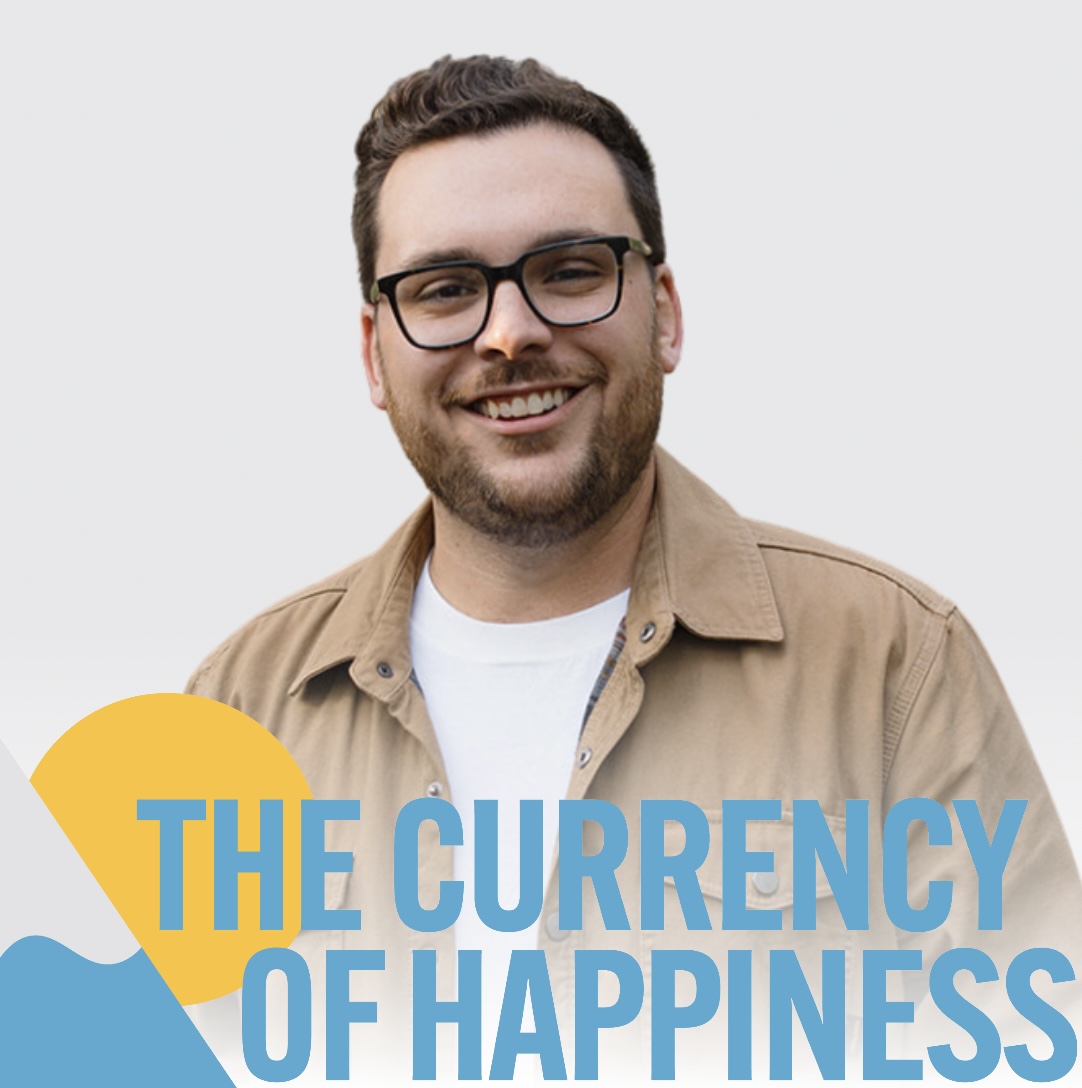
Hey, I'm Andrew!
We crushed $60K of debt in 7 months!
Here is why you shouldn't listen to me:
Had $60,000+ in Debt
Our Relationship Was on the Rocks
I Worked in a Warehouse
Couldn't Afford Steel Toe Boots ... so Found a Size Too Small at a Thrift Store and Had a Numb Toe for 6 Months
But here is why you SHOULD listen to me:
Paid Off $60,000 of Debt in 7 Months
Retired My Wife Before 30 Years Old
Work in Financial Services Industry for 8+ Years
Bought 2 Properties in One Day
Became a 2x Amazon #1 Best Selling Author in 9 Days
Can Now Buy Shoes that Fit
Turn Your Dreams Into Reality
Do you want the FREE framework that I have used to hit every single one of my goals?
Listen to The Currency of Podcast
Launching January 5, 2026



Does this sound familiar?
Are you tired of living paycheque to paycheque?
Do you feel like you're working hard but not getting ahead financially?
Are you tired of chasing success that never quite satisfies?
Do you struggle to understand investing or feel intimidated by it?
Do you avoid looking at your bank account balance?
Do you feel like everyone else has it figured out except you?
Do you dream of being debt-free?
Do you want to feel confident in your financial decisions?
Would you like to leave a financial legacy for your loved ones?
Are you ready for honest conversations about money and meaning?
Do you want real stories, not surface-level success?
Are you ready to treat happiness as something you build, not chase?
Don't worry. I've been there to.
Grab Your Copy of My FREE Goal Setting Framework
A Framework You Can Use Today.
Not Just “Feel Good” Advice.
This isn’t vague motivation.
It’s a simple, step-by-step system I’ve used personally:
✅ Clarity on what matters most
✅ Goals you can actually achieve
✅ Worksheets you will use
✅ Life aligned across money, family, purpose and freedom
Conversations that go deeper than money.
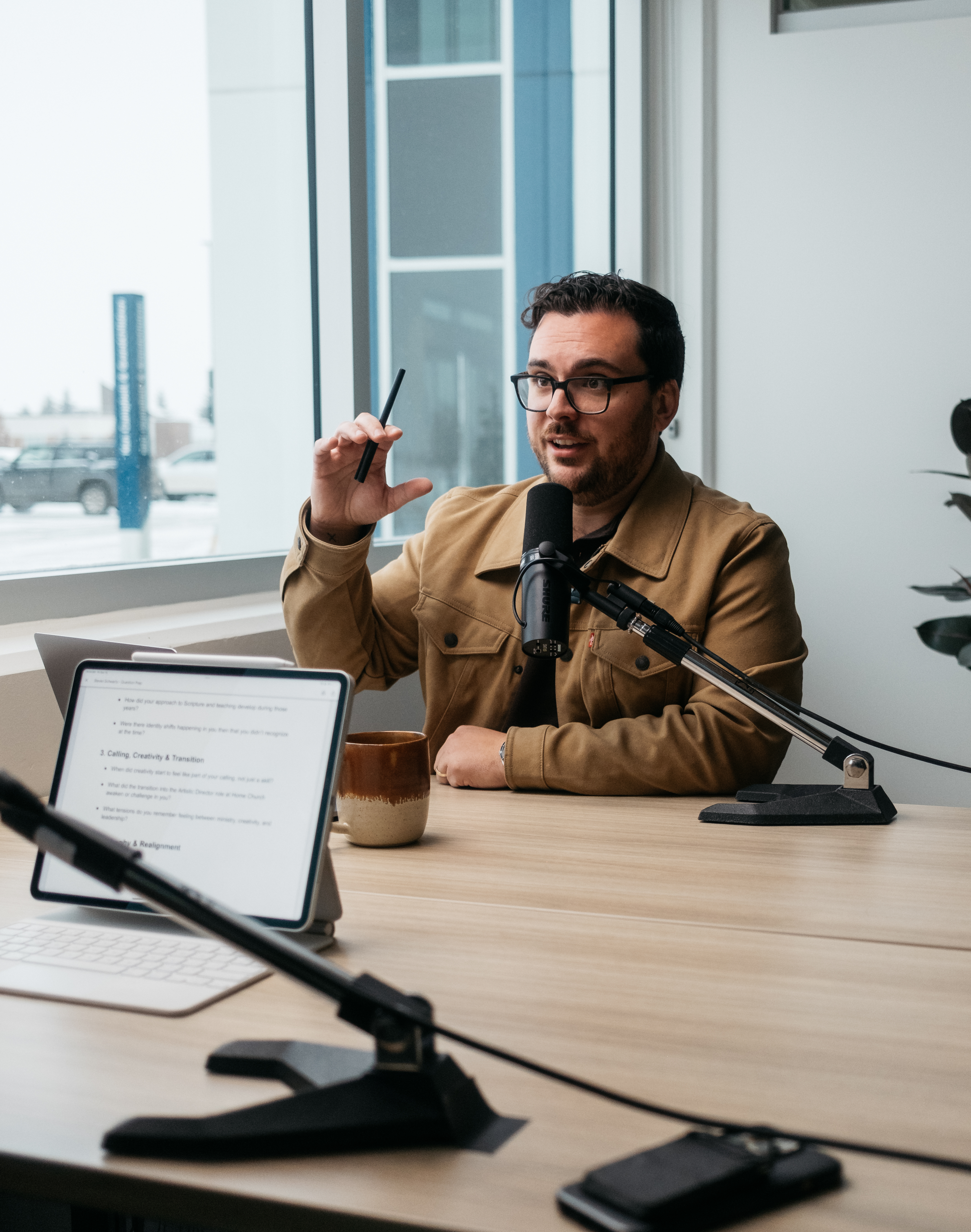
The Currency of Happiness podcast explores life, purpose, leadership, money and meaning through honest conversations with thinkers and doers.
If You Want Clarity On What You Are Building...
Looking For More?
Check out the Blog and More In-Depth Show Notes from the Podcast
Can Money Buy Happiness? Only If You Use It This Way
Money is strange. If it's just a tool, why does it so often feel like a trap?
I've sat with people who make more money than they ever imagined, and they're more anxious than they've ever been. I've also sat with people who make far less and somehow sleep just fine. Which tells me something important: the problem usually isn't how much money you have. It's what you're using it for.
Over the years, both in my own life and sitting across from thousands of people in my work, I started noticing a pattern. Almost every dollar we earn goes in one of five directions. And one of those directions is where most people unconsciously spend the majority of their money. And it rarely makes them happier.
Emily and I made a deliberate decision at some point to stop letting our money drift. We were going to decide what it was for. That meant asking a different question. Not how do we make more money, but what is our money actually for?
The answer changed everything.
1. You Can Buy Stuff
This is where almost everyone starts. A new phone, a new truck, a new couch, a new whatever. And look, I'm not against stuff. Some stuff is great. Some stuff makes life genuinely easier. But we all know that feeling. You buy the thing. You get that little dopamine hit. You're excited to tell someone about it. And then, quietly, it just becomes normal.
The thing that was supposed to make life better fades into the background, and now you're looking for the next thing.
There's a name for this in psychology: hedonic adaptation. Researchers describe it as the tendency for our happiness to return to a baseline level regardless of what we acquire. Psychologist Dr. Thomas Gilovich at Cornell spent two decades studying this and put it plainly: "One of the enemies of happiness is adaptation. We buy things to make us happy, and we succeed. But only for a while."
A classic study on this looked at lottery winners. Researchers expected them to report significantly higher happiness than non-winners. They didn't. The boost was real but fleeting, and it faded faster than anyone predicted.
Stuff is good at improving convenience. It's terrible at creating contentment. The mistake isn't buying things. The mistake is expecting things to carry meaning they were never designed to hold.
We learned that the hard way. At some point, Emily and I realized we were upgrading our lifestyle but not our life.
2. You Can Buy Experiences With People You Love
This one surprised me at first, because we tend to assume things are permanent and experiences disappear. But it's actually the opposite.
Stuff breaks. Stuff gets lost. Stuff gets outdated. Experiences turn into stories, and stories become part of who you are.
The research on this is compelling. A large-scale study from the University of Texas at Austin tracked 2,635 adults and monitored their emotions in real time throughout the day. The finding was consistent across every category and every price point: happiness was higher when people were consuming an experience compared to a material purchase. Not just after. During and before as well.
Dr. Gilovich's research adds another layer. He found that experiences are less subject to social comparison than material goods. When someone else has a nicer car or a newer phone, it undermines your satisfaction with yours. But when someone else has a great story, it doesn't diminish yours. Experiences are inherently more personal, more tied to identity, and more resistant to being compared away.
Whether it's a weekend away, a road trip, a stupid inside joke that comes from a night that didn't go as planned, or an ice cream run with your kids, they somehow talk about for years — when you look back on your life, you don't remember your couch. You remember moments.
We started asking ourselves a simple question when making spending decisions: will this be part of our story, or just part of our storage?
Money used to build memories pays emotional dividends for decades.
3. You Can Buy Time
This one is massive, and almost nobody talks about it explicitly.
Time is the one resource you genuinely cannot make more of. If there's something you hate doing and you can afford to pay someone else to do it, that's not laziness. That's strategy.
Maybe it's hiring someone to clean your home, paying the neighbour's kid to mow the lawn, or using grocery delivery. Not so you can scroll more. So you can actually live more. Time is for being present with your family. For resting. For building something that matters. For taking care of your body and your mind.
Research backs this up. A study published in the Proceedings of the National Academy of Sciences surveyed thousands of adults across income levels and found that spending money to buy back time — outsourcing tasks you find stressful or time-consuming — was consistently linked to greater life satisfaction. The effect held regardless of income level, which means it's not just a wealthy person's strategy. It's a values-based one.
Money spent buying back your time, and then using that time with intention, is rarely wasted.
4. You Can Give Money Away
This one makes no logical sense on paper. And yet it works every single time.
When you give, something shifts. Your money stops feeling like your master and starts feeling like your servant. You're telling it: you don't own me. I own you.
The neuroscience here is genuinely fascinating. A study published in Nature Communications used brain imaging to observe what happens when people commit to being generous. Participants who pledged to spend money on others not only reported higher happiness at the end of the study — their brains showed measurably increased activity in regions associated with empathy and social connection. The researchers found the effect was independent of the amount given. It wasn't how much you gave that drove the happiness. It was the act of giving itself.
A separate study by Harvard professor Michael Norton gave participants either $5 or $20 and instructed them to spend it on themselves or on someone else. That evening, the group that spent on others reported feeling significantly happier. What made it even more interesting: when researchers asked a separate group to predict which group would be happier, they got it wrong. We consistently underestimate how much giving does for us.
Whether you support a family in need, give to your church, or back a cause you actually believe in — generosity connects your money to meaning. And meaning always outlives pleasure.
5. You Can Save and Invest
This one doesn't get applause. But it builds something better than any of the others can on its own: peace.
Why does it feel good to watch your savings grow? Why does paying down debt feel lighter every month? Why does building investments feel satisfying even when the amounts are small?
Because human beings are wired to feel hope when they see progress. Progress signals to your nervous system: we're not stuck, we're moving forward.
Margin is emotional. Stability is emotional. Momentum is emotional. And slowly, your money stops feeling like a constant emergency and starts feeling like a foundation.
There's a reason the most financially stressed people I've worked with describe their money as a source of dread, while the most financially grounded ones describe it as something they rarely think about. That's not because the second group has more money. It's because they have more structure. They have a foundation. And a foundation changes the way you carry everything else.
So, Can Money Buy Happiness?
No. Not directly.
But it can absolutely support it.
When your money is only going toward stuff, it will always leave you wanting more. That's just how adaptation works. But when your money is helping you build memories, buy back time, give generously, and build a future, it starts lining up with your values. And when your money lines up with your values, it stops fighting your life and starts supporting it.
That's the shift. Not from poor to rich. From drift to intention.
So here's a simple question to sit with this week: where is most of your money actually going right now? And more importantly, is that helping you build the kind of life you want?
Because money is a tool. But tools always shape what you build.
Listen to the full episode of The Currency of Happiness wherever you get your podcasts. If this resonated with you, share it with someone who needs it.
[Listen on Spotify][Listen on Apple Podcasts][Listen on YouTube]